در اینجا ترجمه روان انگلیسی با لحنی رسمی و روان پیام امام خامنهای (مد ظله العالی)به مناسبت هفته دولت و تجلیل از اقدامات دولت بویژه رئیس جمهور صادق ودلسوز مورخ۱۴۰۵/۶/۶
English Translation
(In the Name of God).
With reference to the Government Week message of the Supreme Leader, Imam Seyyed Mojtaba Hosseini Khamenei (may his shadow endure), and while appreciating the government’s efforts under difficult circumstances—especially the tireless and honest President (who inaugurated 36,000 projects across the country)—we hereby elaborate on the strategic meta-framework of “education and training” concerning schools, universities, and seminaries. This elaboration addresses the removal of obstacles related to economic challenges, livelihood issues, security concerns, unemployment, the devaluation of the Iranian rial, the marginalization of the dollar, as well as the creation of division and polarization in society, and the breach of social cohesion and unity. Each of these topics is discussed separately.
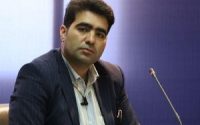
Author and Analyst: Dr. Mohammad Banaeian Sefid
Following the important and strategic message of the Supreme Leader (may his shadow endure) on August 28, 2026 (6/6/1405) regarding Government Week—and while commending the services of the administration during harsh wartime conditions, particularly the diligent and truthful President—His Eminence pointed to the country’s most fundamental challenges.
Here is an analysis of the mentioned topics based on the themes of the Government Week message of 1405:
Economy, Livelihood, and Unemployment:
His Eminence considers domestic production as the key to solving problems such as unemployment and livelihood issues, emphasizing the removal of internal obstacles (not just sanctions):
· Reforming laws and bureaucracy: Reducing cumbersome regulations, redundant permits, and administrative inconsistencies.
· Resource management: Preventing excessive imports and smuggling, and directing liquidity toward production.
Devaluation of the National Currency and Marginalization of the Dollar:
Strengthening the value of the national currency is described as one of the most fundamental tasks, tied to national authority and prestige. The overarching strategy is the gradual removal of the dollar from its influential role and reliance on a resistance economy. Some measures include:
· Severing the economy’s dependence on foreign developments and preventing raw-material exports.
· Confronting profiteering actions in the foreign exchange market and repatriating export revenues.
Division and Polarization in Society:
The Supreme Leader has explicitly prohibited any action that harms social cohesion. He distinguishes between differences of opinion (natural and harmless) and false polarization (destructive). Polarization means condemning the other side absolutely, even if they are right. This is exactly what the enemy seeks to create division between the people and the establishment.
Social Cohesion and Unity:
This matter is considered an absolute necessity, requiring consideration across all major arenas—cultural, political, security, and economic. Any discouraging rhetoric or baseless dichotomies (such as “war or negotiation”) that have caused damage in the past are forbidden.
Education and Training (Meta-Strategy):
Education (schools, universities, and seminaries) is a meta-strategic issue, meaning that other strategies must be designed with it in mind. Within this framework, special attention is paid to the role of teachers, professors, and seminaries in spreading a positive culture.
Operational and Executive Methods for Each Component, Based on the Meta-Strategy of Education:
Considering “education and training” as a meta-strategy, the executive methods for the mentioned components are no longer merely economic or political measures; they must be achieved through cultural development, human resource training, and a shift in discourse within the educational system.
For each component, the following executive methods are proposed:
- Economy, Livelihood, and Unemployment (with a focus on domestic production):
The concept of a “resistance economy” within the educational context emphasizes “raising entrepreneurial and productive individuals” rather than merely “entering the job market.”
· Changing educational content: Incorporating concepts of teamwork, creativity, risk-taking, and skills training into textbooks—not just theoretical economics.
· Hidden curriculum: Reforming the behavior of school administrators and teachers regarding resource consumption and handling public property, so that students practically learn “resource management.” - Devaluation of the National Currency and Marginalization of the Dollar:
In this perspective, strengthening the national currency depends on a “knowledge-based economy” and reducing reliance on raw-material exports.
· Shifting attitudes in higher education: Moving universities from “theoretical research” toward “applied research” that leads to high-value-added products and reduces import needs.
· Training committed economists: Producing specialized experts who can provide practical solutions for using national currencies in regional transactions. - Unity of Seminaries and Universities, and Social Cohesion:
Polarization is recognized as one of the greatest obstacles to national unity. The executive solution goes beyond joint conferences.
· Knowledge synergy: Creating interdisciplinary fields where jurisprudence and humanities can find a common language to solve social issues such as justice and poverty.
· Training committed teachers, instructors, and professors: If teachers and professors are committed, ethical, and possess “national zeal,” these qualities will naturally be passed on to students, setting aside superficial differences. - Education and Training (Meta-Strategy):
Implementing all the above components requires “raising a person aligned with the ideals of the Islamic Revolution”—someone patient, wise, innovative, and proactive.
· Prioritizing character development over instruction: In practice, curricula should be designed so that “self-purification” and “moral conduct” are seen alongside knowledge acquisition as pillars of the educational system.
· The role of seminaries: Seminaries must train specialists to enter the field of teacher training and the production of Islamic humanities, so that education is no longer merely a consumer of foreign models.
The Supreme Leader’s remarks on the “meta-strategy of education and training” are a clear guiding light for all institutions and members of society. We hope that this profound perspective will increasingly permeate the country’s macro-planning as well as our individual and social behavior.
And our final prayer is: All praise belongs to God, the Lord of the Worlds.
Author and Analyst: Dr. Mohammad Banaeian Sefid